ECU Tuning File Safety: What Matters Most
March 31, 2026
19 min read
13 views
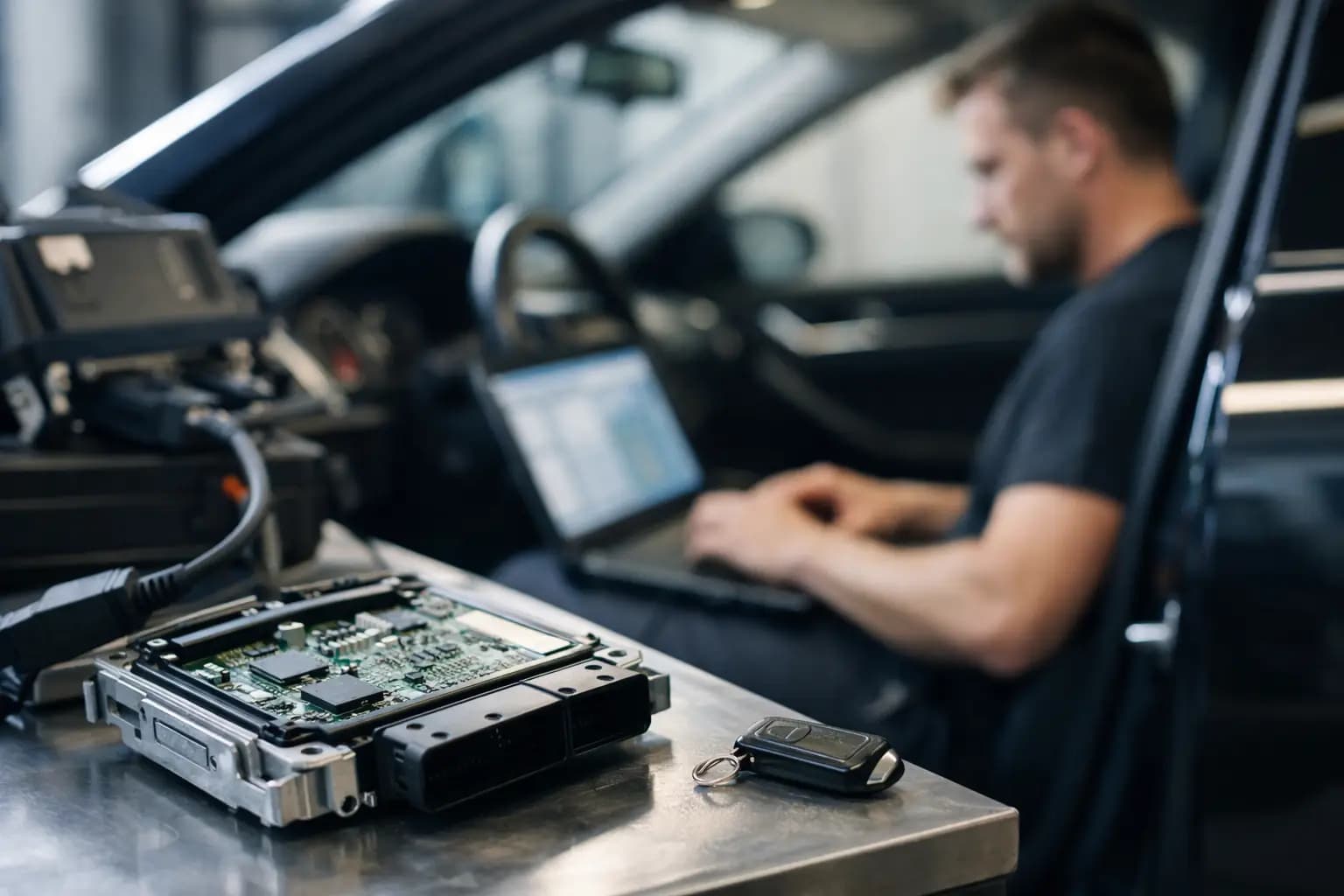
A practical guide for tuning shops on ECU tuning file safety, explaining how proper reads, correct software matching, structured calibration, and tested files help prevent failures, ensure reliability, and maintain consistent vehicle performance.
A vehicle comes back with a check engine light after a tune, and the problem usually gets blamed on "the file." Sometimes that is true. More often, the issue started earlier - with a poor read, a mismatched software version, weak checksum handling, or a calibration built without enough attention to limits, torque monitoring, and transmission behavior. That is why ecu tuning file safety is not a marketing phrase for professional shops. It is the difference between a clean handoff and a comeback that costs time, money, and trust.
For tuning businesses, file safety is really about control. You need to know the original file is valid, the modified calibration matches the exact ECU or TCU strategy, and the result will perform correctly under real operating conditions. Power matters, but predictable operation matters more. A fast turnaround only has value if the calibration is stable.
What ECU tuning file safety actually means
In practical terms, ECU tuning file safety means the calibration changes stay within a defensible operating window for that specific hardware, software version, fuel quality, and intended use. It also means the file can be written correctly, starts and runs as expected, and does not trigger avoidable drivability faults, limp behavior, or component stress.
A safe file is not simply a conservative file. It is a calibrated file. That distinction matters. A weak tune can still be unsafe if it ignores torque structure, boost control strategy, smoke limitation, lambda targets, thermal protection, or gearbox interaction. On the other side, a performance-oriented file can still be safe when the calibrator understands the platform and respects the mechanical and electronic limits that actually govern reliability.
This is where many shops run into avoidable risk. They compare one dyno number or one customer impression and miss the underlying logic of the calibration. Real safety comes from map relationships, not isolated values.
The biggest risks behind unsafe tuning files
The most obvious risk is a bad modification. That can mean excessive boost request, unrealistic rail pressure, poor ignition advance, or torque limit changes that conflict with factory monitoring. But the more expensive failures often come from process errors rather than aggressive intent.
A file can be unsafe because the original read was incomplete or corrupted. It can be unsafe because the wrong virtual read was matched to the wrong software version. It can be unsafe because DTC handling was used carelessly, masking a real issue instead of solving the root cause. Even a technically good calibration can become a problem if the write procedure is unstable or battery voltage drops during programming.
Transmission behavior is another area shops sometimes underestimate. Engine torque changes affect shift strategy, clutch pressure demand, torque intervention, and protection logic. On modern platforms, ECU and TCU calibration quality are closely linked. If one side is modified without respecting the other, the customer may feel harsh shifts, slipping, intervention errors, or reduced performance consistency.
Why tested files matter more than claimed gains
A professional customer does not just need a file that makes power on one vehicle. You need a file that behaves consistently across repeat jobs. That is why tested calibrations matter more than ambitious claims.
Testing means more than flashing a car and seeing that it drives. It means the calibration has already been reviewed against known strategy behavior, common software variations, and expected operating safeguards. It means checksum integrity is handled correctly. It means the torque model has not been treated as an afterthought. It means the file has been built by someone who understands how the ECU interprets load, airflow, pressure, temperature, and intervention thresholds together.
This is also where engineering discipline shows up. Shops that rely on random file sources often find that two files with similar advertised gains can behave very differently in the field. One may deliver smooth power and factory-like drivability. The other may produce surging, inconsistent throttle response, smoke, gearbox complaints, or fault codes after a few drive cycles. The difference is usually calibration quality, not just ambition.
ECU tuning file safety starts with the original read
If the original file is wrong, everything after it is built on bad input. That sounds basic, but it is still one of the most common causes of tuning problems. Professional workflow starts with a clean identification and a verified read from the correct tool mode.
Before ordering a modification, it is worth confirming software numbers, hardware references, read method, and whether the file is complete for the requested operation. Bench, boot, OBD, and virtual methods all have their place, but they are not interchangeable in every case. The safe choice depends on the control unit, the protection level, and the change being requested.
Good shops also document the vehicle condition before tuning. Existing DTCs, weak batteries, airflow issues, boost leaks, injector problems, transmission wear, or poor fuel quality can all distort the result and get blamed on the calibration. File safety is partly calibration quality and partly job control. If you skip the second part, the first part cannot protect you fully.
How professional calibrators reduce risk
The safest tuning workflow is structured, not improvised. A professional calibrator evaluates the file, identifies the strategy, applies changes that fit the platform, validates checksums, and considers how the ECU and TCU will respond under load. That process is slower than copying generic map changes, but it is far faster than dealing with failures afterward.
This is where experienced WinOLS-based development still matters. Platform knowledge, damos interpretation, map identification, and version awareness all affect outcome quality. On newer vehicles especially, a file cannot be treated as a simple collection of boost and fuel maps. Torque arbitration, modeled airflow, temperature compensation, component protection, and diagnostic logic all interact.
Support also matters more than many shops admit. When a vehicle has an unusual software version, a tool-specific read issue, or a post-flash behavior that needs review, immediate technical support reduces downtime and protects your customer relationship. For a working tuning business, responsiveness is part of safety.
A practical standard for evaluating file providers
If you buy tuning files instead of calibrating everything in-house, file provider selection is a direct safety decision. The right question is not just whether a provider can tune the car. The question is whether they can deliver repeatable, tool-compatible, support-backed calibrations that protect your business.
Look for signs of process maturity. That includes clear compatibility with major read and write tools, experience across ECU and TCU platforms, understanding of software version differences, and a calibration workflow based on tested solutions rather than recycled archives. Warranty language and a professional calibration guarantee also matter, not because they eliminate risk, but because they show the provider is willing to stand behind the work.
Turnaround time should be judged the same way. Speed is valuable, especially for retail jobs waiting in the bay, but fast delivery without engineering control is not an advantage. The better model is fast processing with quality gates. That is the standard professional shops should expect.
For businesses that need that kind of workflow, https://ecu-chiptuningfiles.com is built around a structured portal model - upload the original file, receive a professionally modified calibration, and get technical assistance when the job needs it. That kind of system is useful because it reduces variation in how jobs are handled.
It depends: stock vehicle, modified vehicle, and customer expectations
No discussion of ecu tuning file safety is complete without saying this clearly: safe for one vehicle may not be safe for another. A stock daily driver on pump gas has a different margin than a vehicle with hardware changes, heavy towing duty, poor maintenance history, or inconsistent fuel quality.
That is why the best calibrations are matched to the job, not just the vehicle model. A customer asking for maximum output on a marginal clutch, aging turbocharger, or unknown service history is asking for a different risk profile than a customer who wants clean Stage 1 drivability. Shops that handle this well set expectations early. They explain the trade-off between peak performance and operating margin instead of pretending every setup can have both.
The same principle applies to emissions-related requests, DPF or EGR issues, and transmission complaints. A file should not be used to hide a mechanical problem. That may create a short-term sale, but it does not create a stable result.
The real goal is confidence at handoff
When the customer picks up the vehicle, the goal is not just stronger acceleration. The goal is confidence. Cold start should be normal. Part-throttle should be smooth. Shift behavior should make sense. No warning lights, no surprises, no excuses about why it "needs time to adapt" when the real issue is calibration quality.
That is what professional tuning businesses are really buying when they prioritize safe files. They are buying consistency, fewer support cases, stronger customer retention, and a workflow they can trust under pressure. Power sells the job, but reliability protects the business.
The best tuning operations treat file safety as part of their brand, because every stable calibration makes the next sale easier.
Tags
ECU calibrationWinOLS tuningchiptuning filesECU tuning file safety
Last updated: July 9, 2026
Related Posts

ECU Chiptuning
What Is a Safe Turbo Boost Target?
Discover how to set a safe turbo boost target by balancing airflow, fuel, temperature, and ECU strategy for reliable and repeatable performance.
22 min
67
ECU Chiptuning
ECU Fault Code Fixes That Actually Last
An ECU software fault code fix is not just about clearing a warning light. Professional tuning shops combine diagnostics, calibration logic, and hardware checks to prevent recurring faults and ensure reliable vehicle performance.
20 min
66
ECU Chiptuning
What Is a Custom ECU Calibration File?
A custom ECU calibration file is a modified engine control unit software built from the original vehicle file. It optimizes torque, fuel management, boost control, and safety limits for a specific vehicle configuration.
21 min
112